Locomotives and Rolling stock
72C
.jpg)
Many of our locomotives carry the British Railway’s shed code 72C; this was the code for the locomotive shed at Yeovil Town from January 1948 until September 1963 when Yeovil Town was transferred to the Western Region of BR.
All BR locomotives were allocated to a particular shed which had its own shed code which was displayed on an oval plate attached to the smokebox door of each locomotive allocated to that shed. This allowed for quick identification of where the locomotive was based.
After the end of Steam in 1968 depots were allocated a two-letter code abbreviation, of their name eg. Laira became LA.
When we began getting locomotives onsite at the Railway Centre it was decided to adopt the Southern Region’s shed code for Yeovil Town and continue its use as our own for Yeovil Junction’s engine shed.
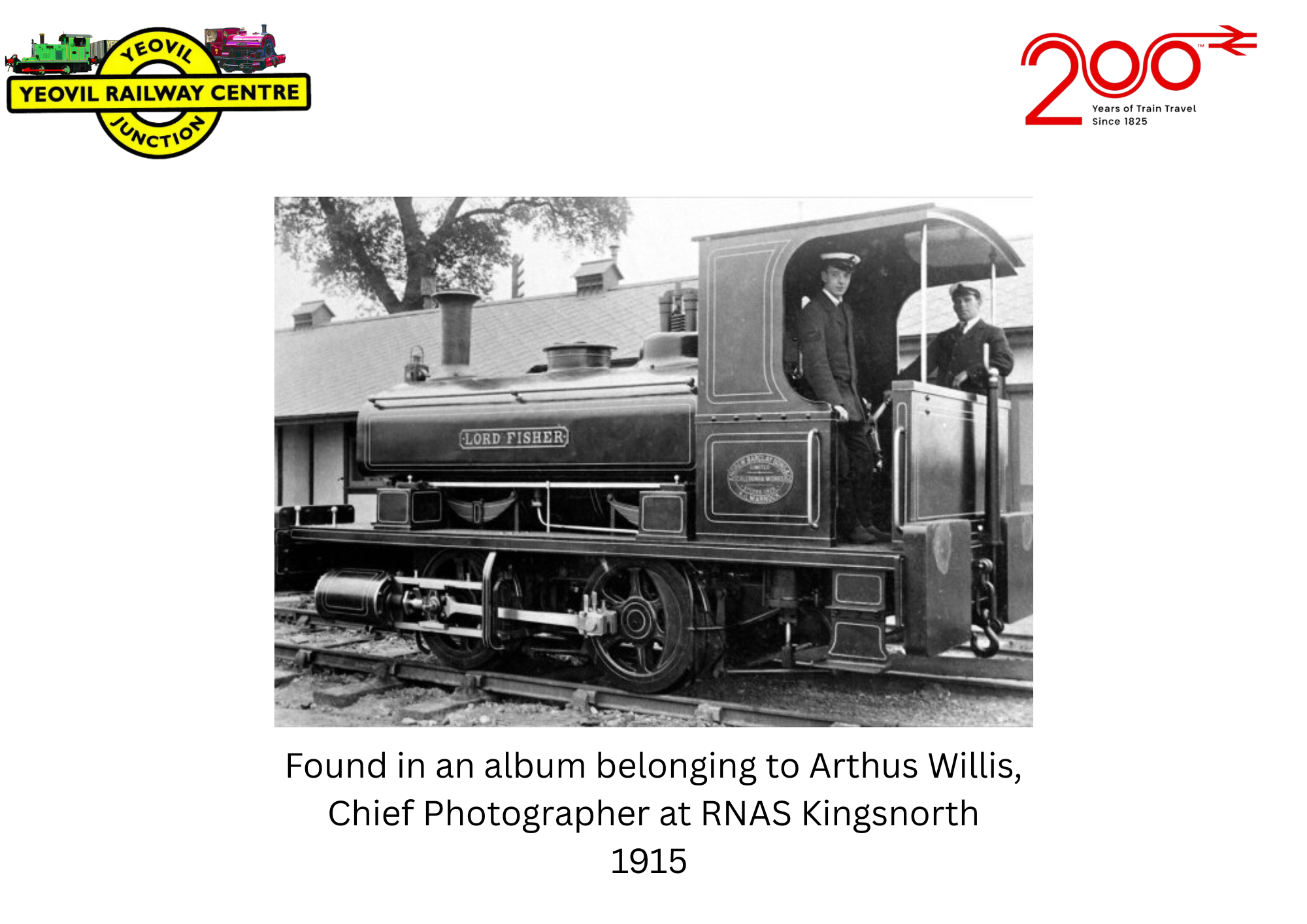
Lord Fisher
‘LORD FISHER’ was returned to steam in June 2013 and is owned by a Trust. Since the final steaming of Andrew Barclay 0-4-0ST ‘Lord Fisher’ (Works No 1398, Built 1915) on 13 January 2007, the locomotive has been stored on East Somerset Railway at Cranmore awaiting a 10 year overhaul. As the railway had no current requirement for ‘Lord Fisher’, Yeovil Railway Centre agreed with the owner, Barry Buckfield, to move the locomotive to its site at Yeovil Junction for restoration.
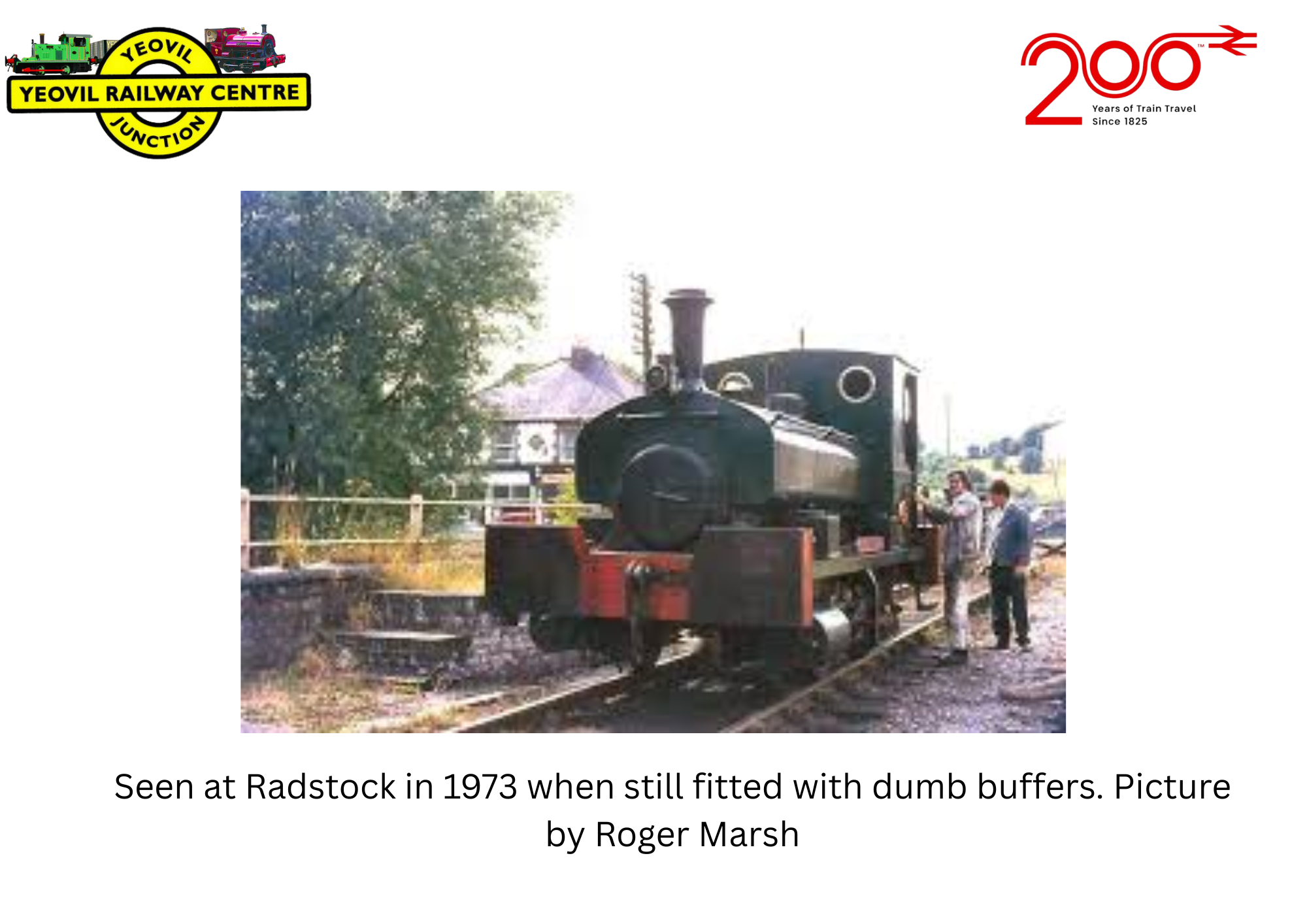
‘Lord Fisher’ left the works on 7 September 1915 and worked at military establishments in the south east until being purchased by the Gas Board around 1950. It ended up dumped at Hilsea Gasworks in about 1960 when it was purchased and fully overhauled by the Chapel Tramway in Southampton, an industrial line near to the docks. This line closed in 1967 and in the same year 'Lord Fisher', still in working order, was bought by a small group and went first to Longmoor, then to Radstock and finally in 1973 to Cranmore. By this time Barry Buckfield was the sole owner. During the early years of the East Somerset Railway, it was the mainstay, operating brakevan trips and being available for shunting. It was still being used for most shunting up to around 1997 when small diesel shunters were introduced at the East Somerset Railway, which took over most this work.
From 2022 the locomotive was removed from use and is undergoing 10 yearly overhaul.
.jpg)

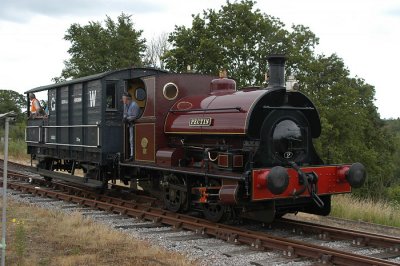
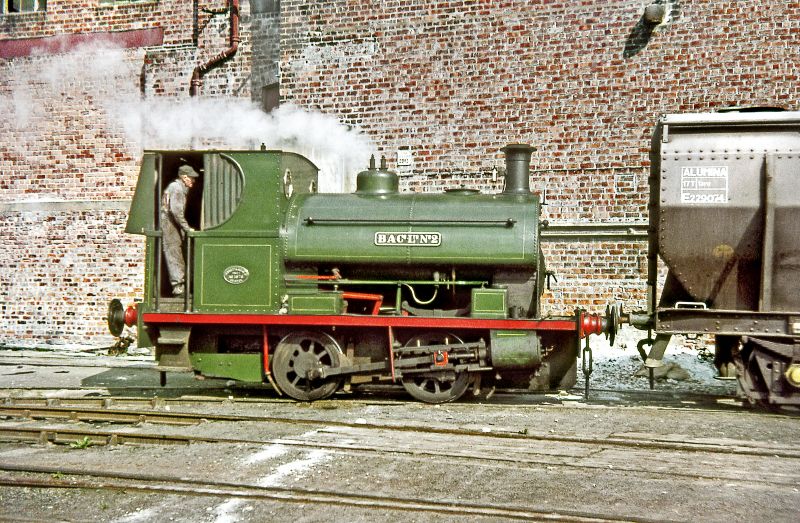
Pectin
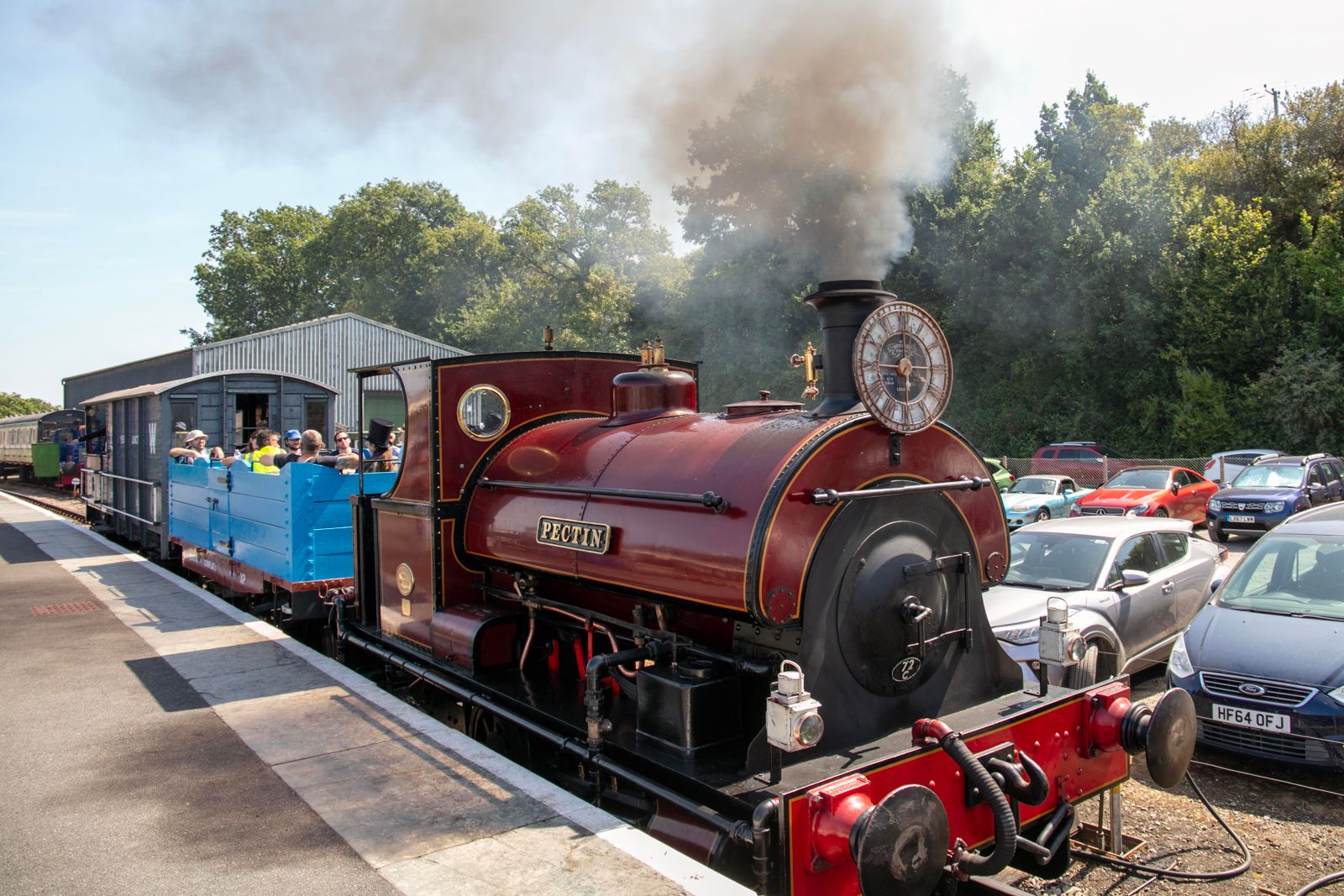
'PECTIN' was built in 1921 (number 1579) by Peckett & Sons Ltd of Bristol at its Atlas Works, having been designed to perform shunting duties on standard gauge factory sidings. Its working life was spent at the British Aluminium Co (BAC), Burntisland, Fife, Scotland. The engine was purchased for £225 on 24 December 1971 and arrived at its new home at Bulmers Cider in Hereford on 2 March 1972. The loco arrived in Yeovil in 1995 having had its third boiler overhaul costing some £15,000.
During 2004 'Pectin' was given a full 10 year overhaul at Yeovil with much of the work being undertaken by the Centre's volunteers and in 2006 the engine was gifted to South West Main Line Steam Co as part of the winding up of 6000 Locomotive Association. We are delighted to maintain our contact with the ex-members of 6000 Locomotive Association with a special event each year.
The locomotive was named Pectin after an enzyme used to manufacture cider.
From 2015 to 2022 the locomotive underwent a 10 yearly overhaul including removal of the boiler.

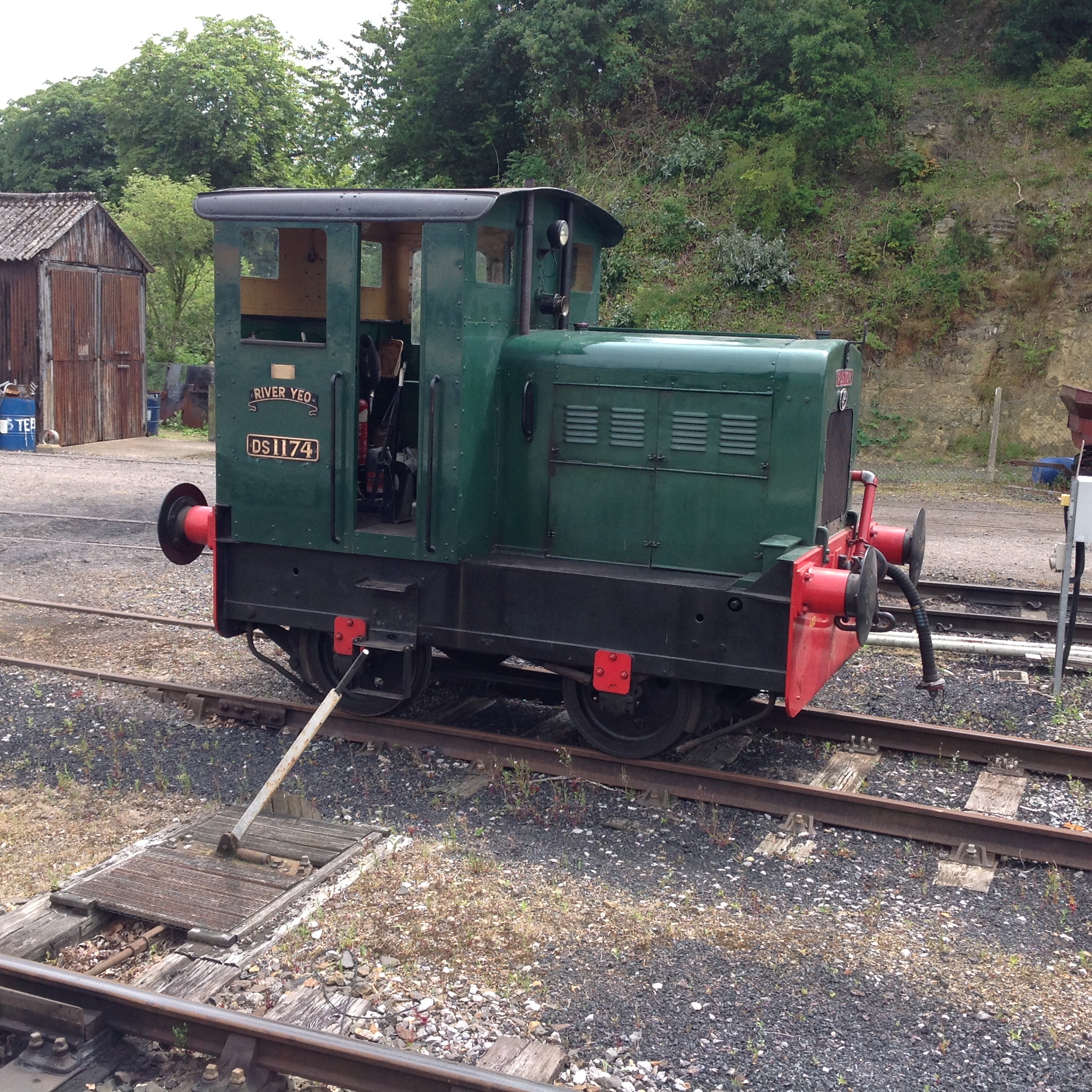
River Yeo
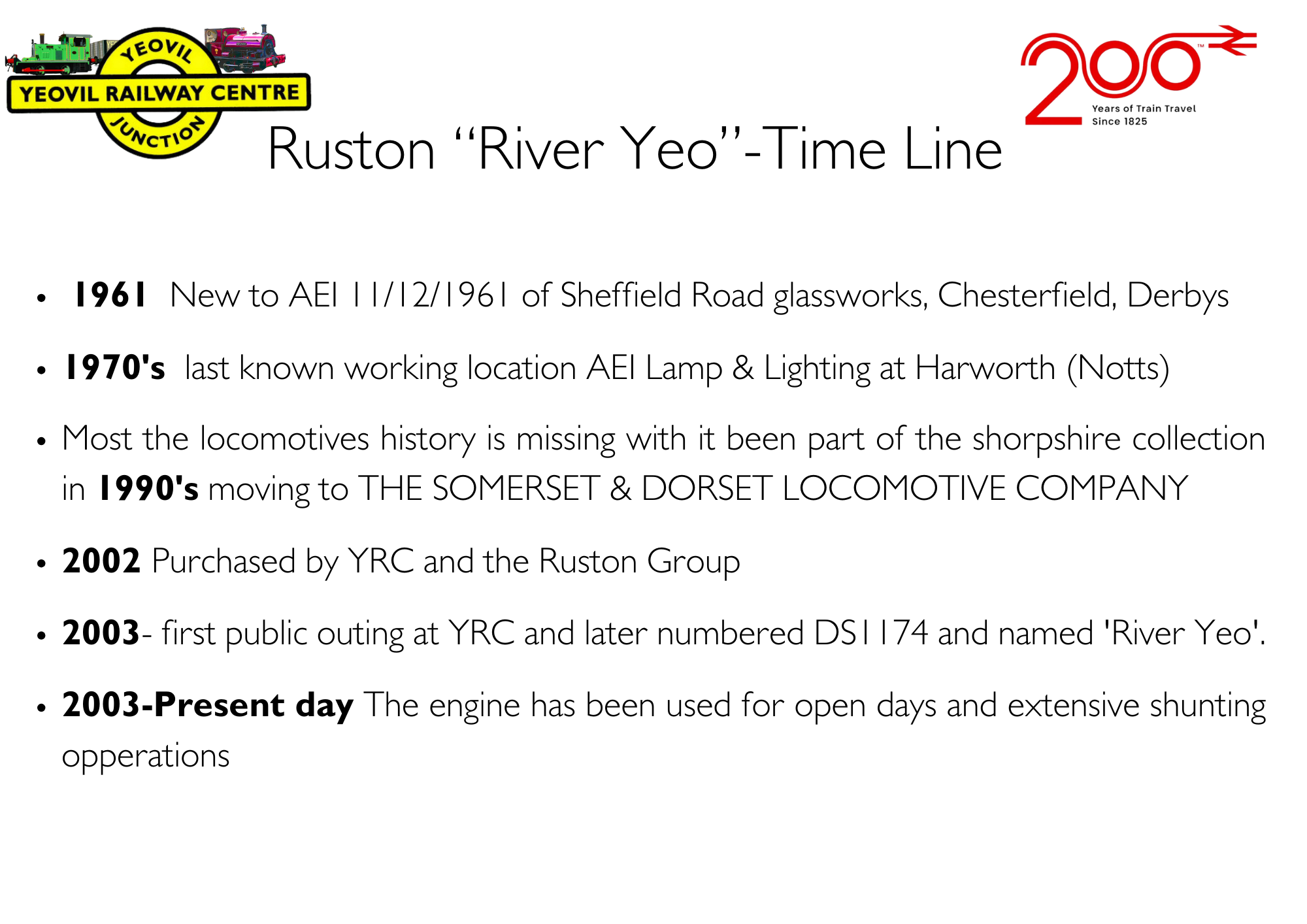
Engine Type 48DS with 48 hp Ruston 4YC engine. Works number 458959 and engine number 460158. New to AEI 11/12/1961 of Sheffield Road glassworks, Chesterfield, Derbys with a last known working location AEI Lamp & Lighting at Harworth (Notts). Some 130 locos of this class were built before this example and only 6 afterwards as demand for locos with low power and traction effort had dwindled. The engine has been numbered DS1174 and named 'River Yeo'.
A similar engine (DS1169) used to work at the Yeovil Junction permanent way department (The loco was ex-works on 14/5/1946 (Serial No 237923) and delivered to the Bristol Aeroplane Co at Weston super Mare. It was sold to BR (Southern Region) in 1948, and was used as a shunter at Folkestone Warren until 1962 when it was transferred to Yeovil Junction.)
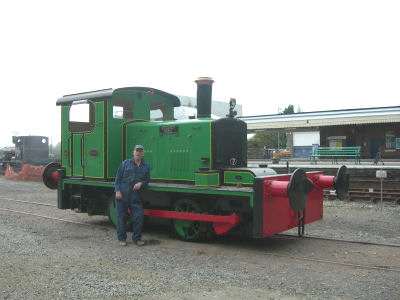
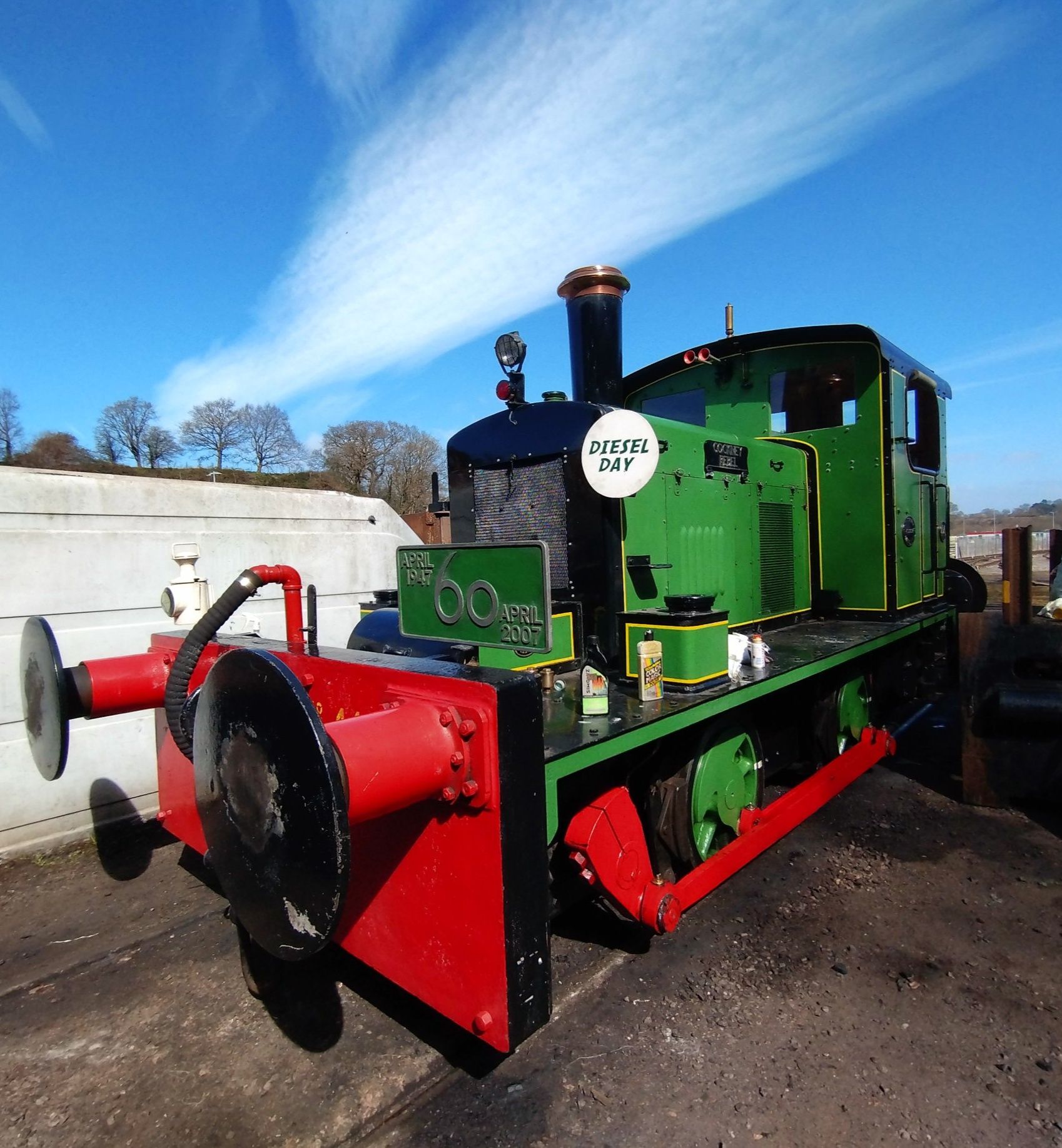
Cockney Rebel
Number 44. Allocated number 4000007 (Type 400 and 7th constructed) when built in 1947 with a 60 hp engine.
Named 'Cockney Rebel' after its owner in 2007 to celebrate its 60th birthday and restoration. The locomotive is complete with original Fowler engine.
Built by John Fowler & Co and delivered new to Weir Pumps at Coatbridge, Scotland where it stayed for 6 years and then moved to Castrol Oils at Ellesmere Port for another 23 years. Later gifted by Burmah Oil to the Llangollen Railway for use on their new railway. The locomotive was used extensively with the permanent way and named “Burmah” due to its previous career. After being stored the engine became part of the Shropshire Collection of locomotives being stored in a field. The Collection was purchased by Somerset & Dorset Locomotive Company Limited and was amongst a number which moved to storage at Yeovil Junction (upside sidings). Purchased for preservation and significantly restored by Ron Weston. From 2021 the locomotive is now looked after by William Gane and continues to be in public use.
.png)
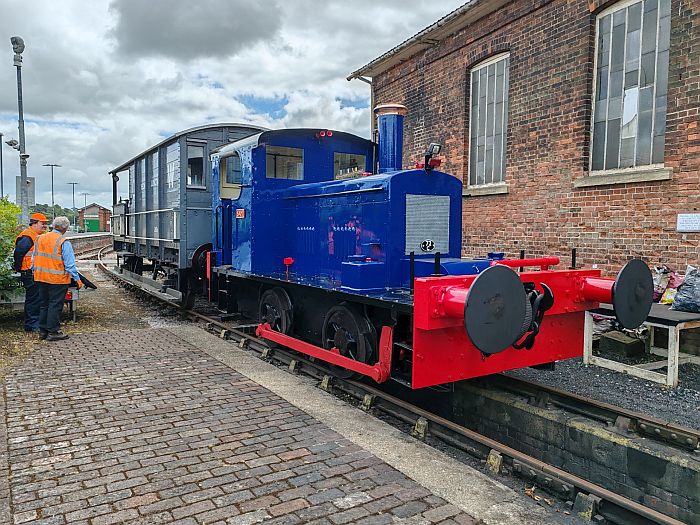
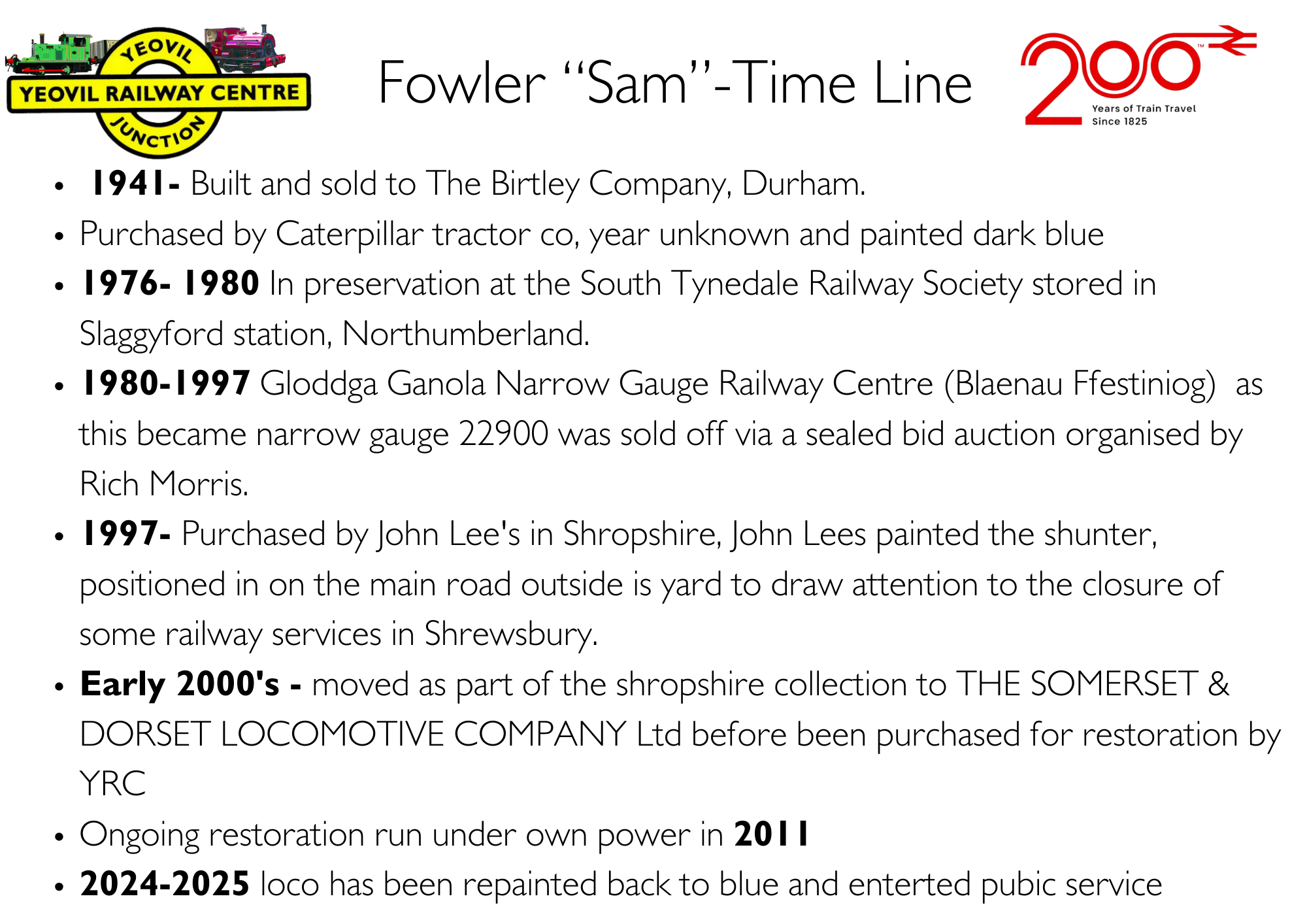
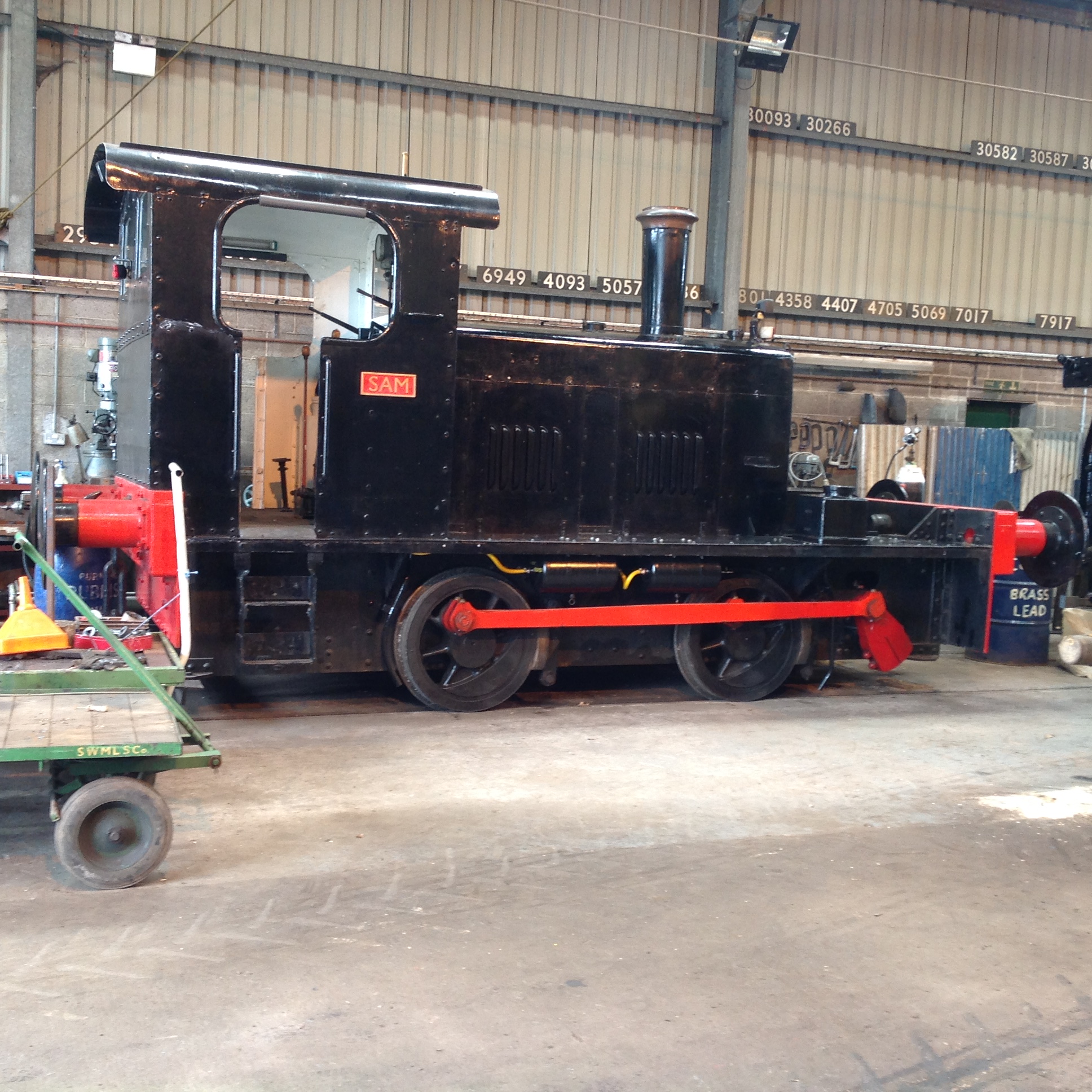
Sam
Fowler Diesel Mechanical Locomotive Number 22900. This is a 4 cylinder locomotive weighing approx 15 tons and is fitted with a 40hp Fowler Sanders engine.
The locomotive was delivered to Birtley Co. Ltd in County Durham on 29 March 1941 spending its life with Caterpillar tractor co tractors before preservation in the 1970's. After the majority of the restoration work was carried out by YRC it was Named 'Sam' after a railway dog.
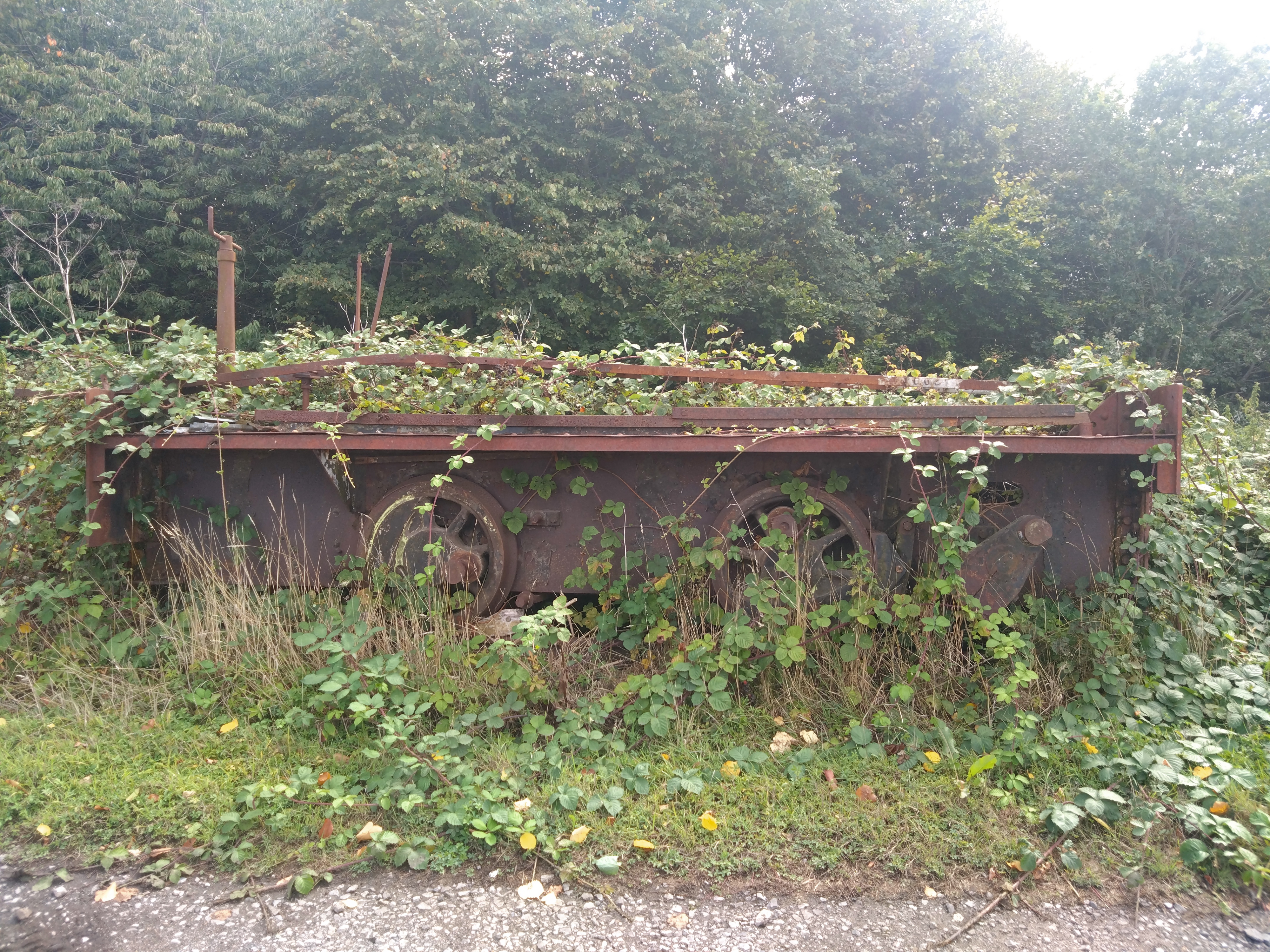
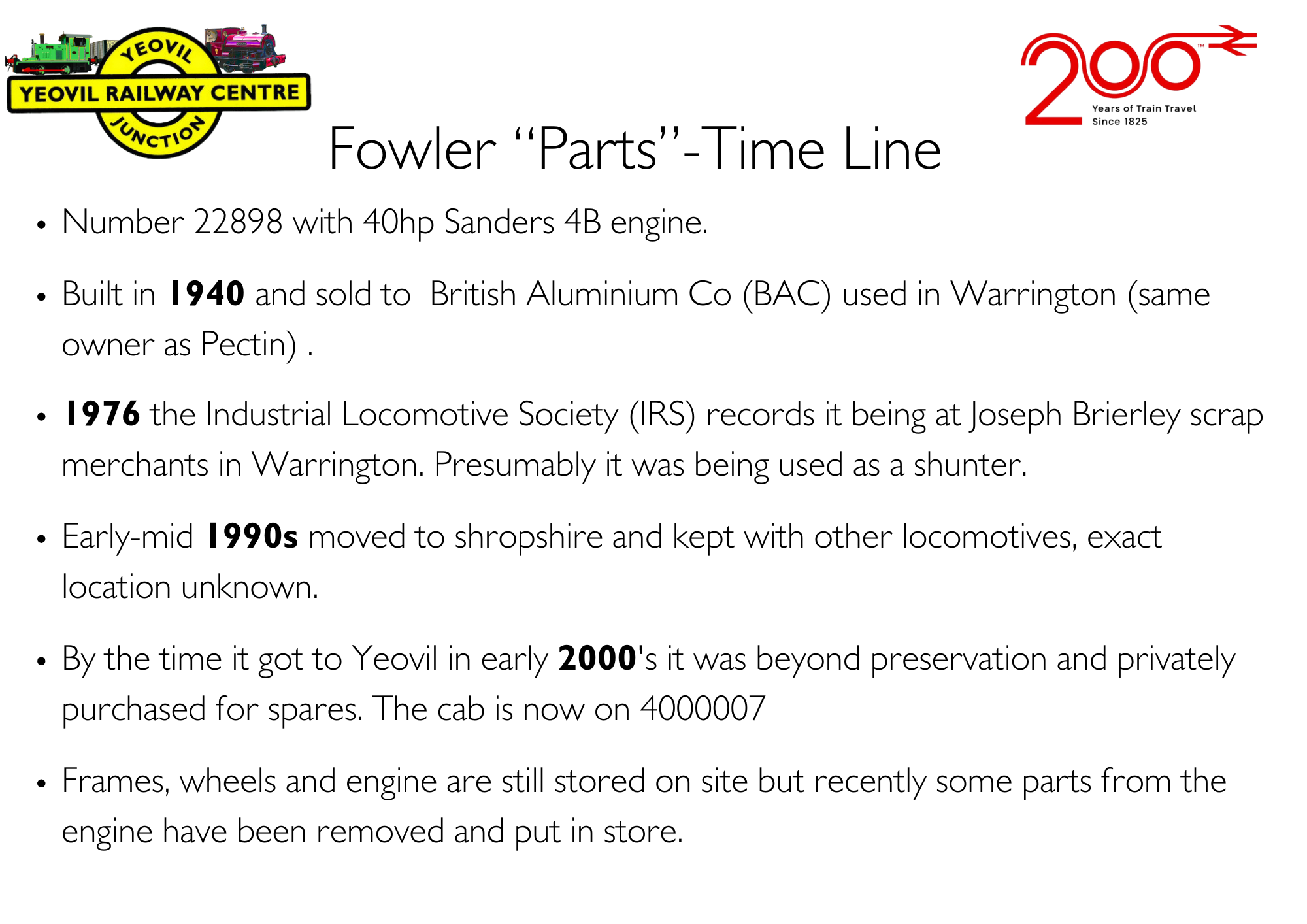
Fowler "Parts"
Number 22898 originally with 40hp Sanders 4B engine. Been used for parts to keep our other Fowlers running. Please note this is not always viewable on our open days.
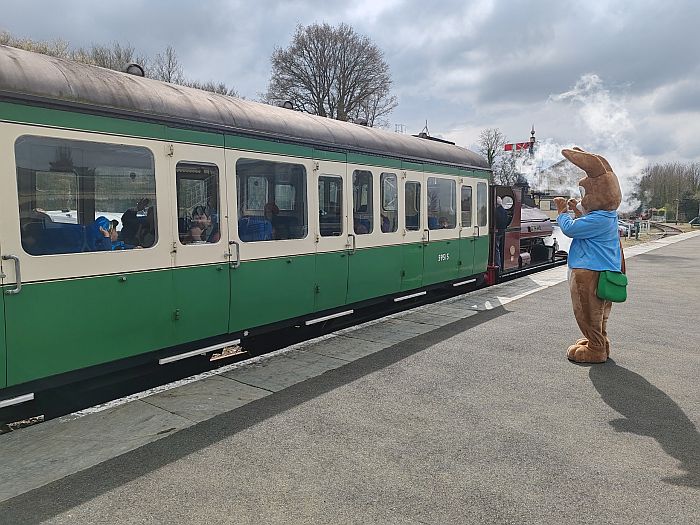
Coach 59515
Coach 59515 (DMU Class 117 TCL (Trailer Composite Lavatory) no 59515) was previously in store at Minehead Station on West Somerset Railway.
The vehicle was first preserved by the West Somerset Railway in 1995. At the time, the WSR had been running a varied mix of DMU sets and wanted to standardise its maintenance, so it acquired five Class 115 power cars along with six Class 115/117 trailer cars, including 59515, as direct replacements. Rather than being kept in its original DMU role, 59515 was instead put to use as hauled coaching stock due to its passing external resemblance to certain GWR coach designs. By March 1996, it had been painted into a non-authentic carmine and cream livery and formed part of a vacuum-braked four-car rake. That dedicated four-coach set was later broken up.
By 2012, 59515 was judged surplus to requirements on the WSR and put up for sale. It was bought the following year by the Yeovil Railway Centre and moved to its new home by rail, hauled over the main line by a Class 31 diesel locomotive.
Restoration work began almost immediately, in July 2013, with the removal of the corridor connections and the vehicle's relocation into the workshop for attention. Its toilets and water tanks were stripped out, and in August that year the ends of the coach were heavily reworked: the corridor connections were plated over and three observation windows cut into each end. The bogies were repainted around the same time, and by September and October the bodywork sides had been repaired, primed in grey, and fitted with overhauled buffers. Before the year was out, a new ceiling had gone into the former toilet area and the saloon lighting had been restored to working order, allowing 59515 to be pressed into service, still unfinished, for that year's Santa Special operations.
Work resumed in January 2014, when the old toilet window was removed and replaced with a set of double doors to allow wheelchair access, creating the wheelchair space that now occupies the vehicle's central section. Through February and March, the exterior was finished off with extensive sanding and filling before a topcoat of green and cream livery was applied, the scheme the coach still carries today. With that, 59515 formally entered service on the railway.
It was purchased in 2013 and delivered by a class 31, the toilet were removed to make a disabled space (with the addition of double doors). The connecting tunnels were removed and and a driving cab constructed to make a loco hauled "push/pull" service.
Two members, Ron and Shirley Weston, were very generous in assisting towards the purchase and movement costs from West Somerset Railway. The coach has now been named 'Shirley W' in honour of Shirley.
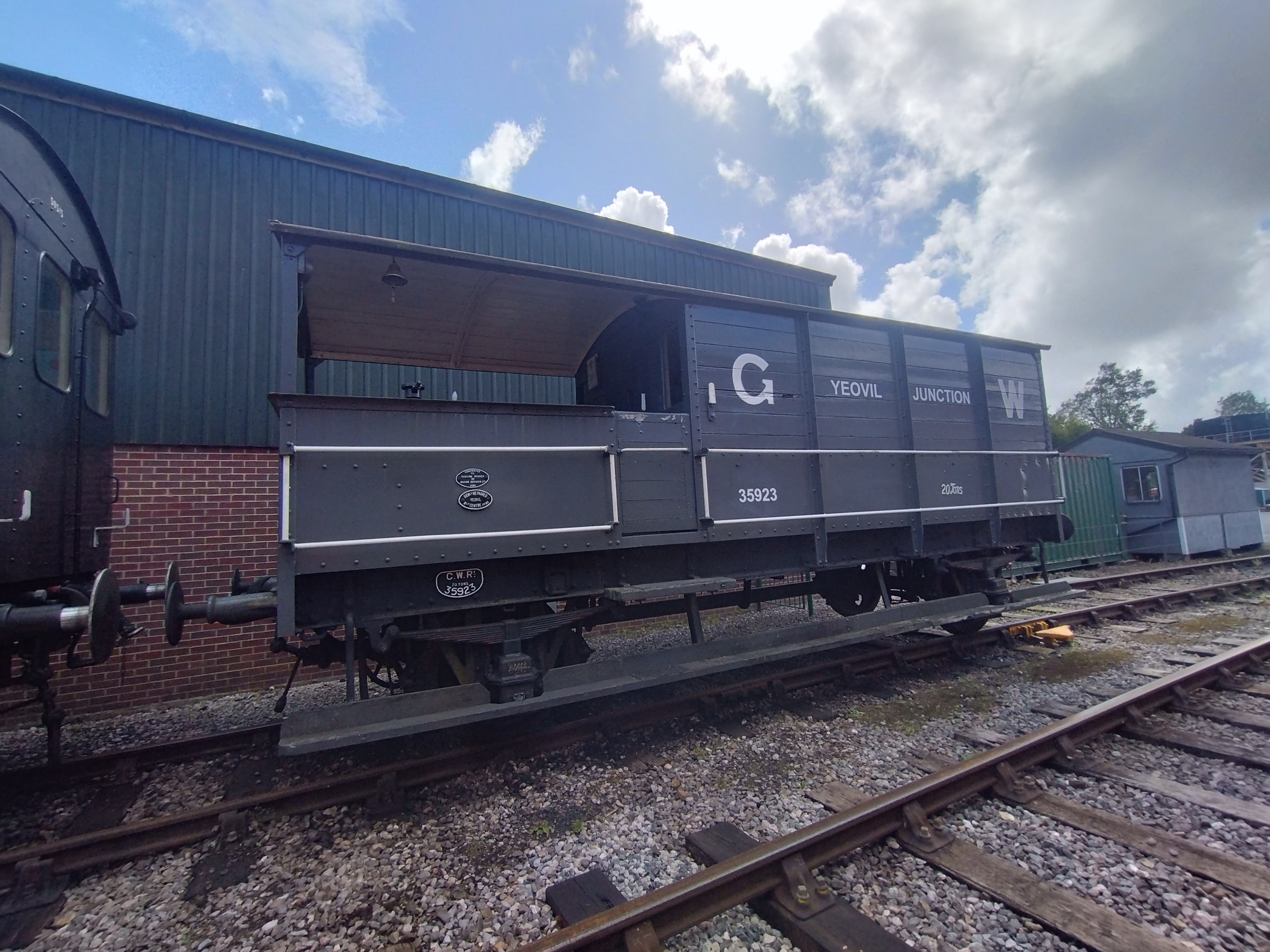
GWR Toad brake van 35923
GWR Toad brake van 35923 was formally handed over by 6000 Locomotive Association to the ownership of South West Main Line Steam Company in 2005.
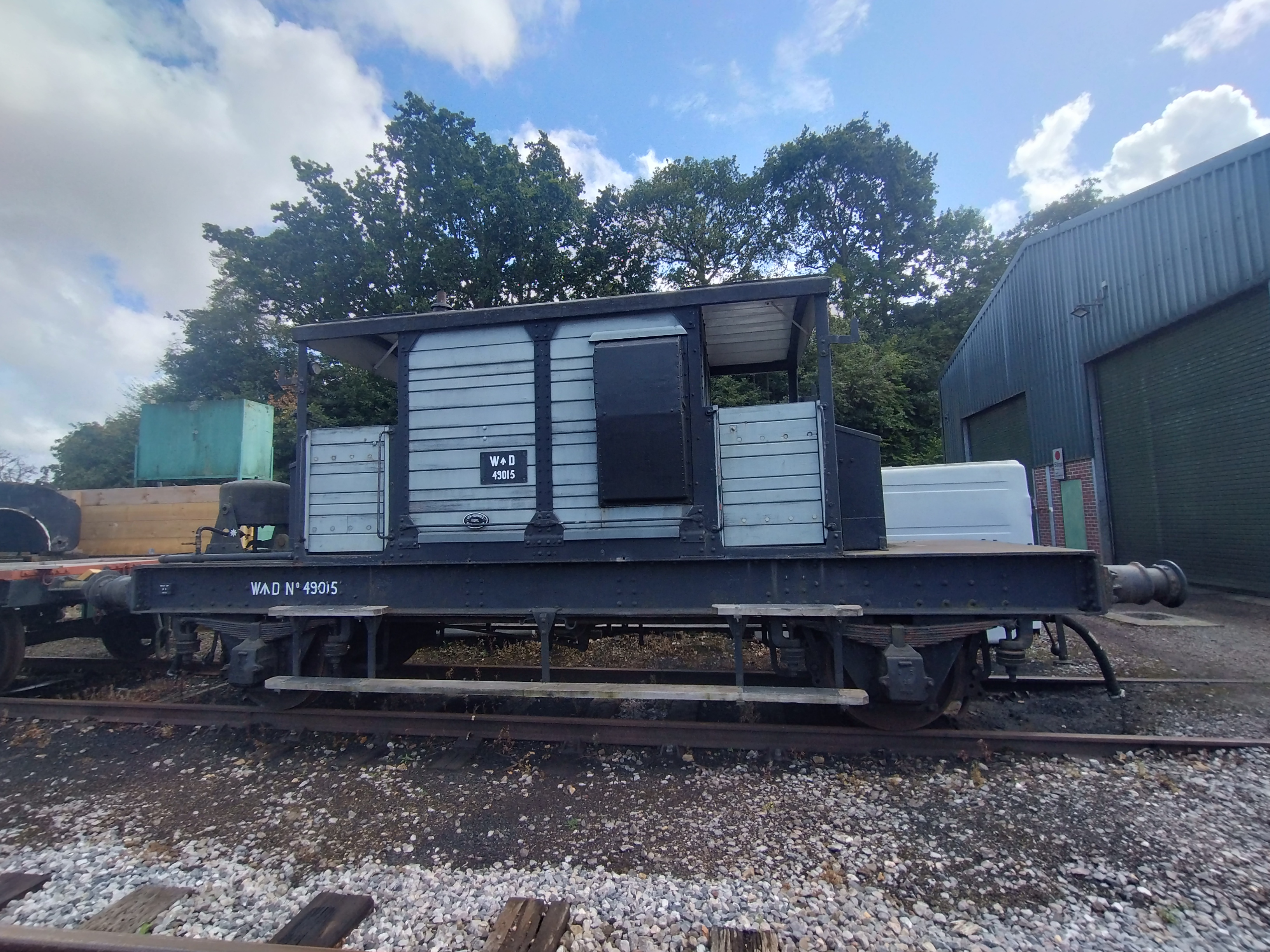
SR Brake Van
War Dept to a Southern Railway design (1018). Built in 1942 and purchased from RAF Chilmark in 1995
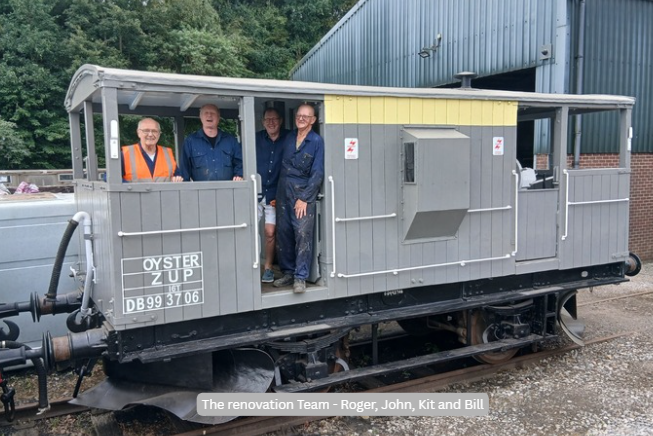
British Railways "Oyster"
British Railways "Oyster" (DB993706)formely British Railways' departmental fleet, this vehicle belongs to a small and specialised family of wagons built not to carry goods or passengers, but to keep the permanent way in good order.
The Oyster was a ballast plough brake van, a design that traces its roots back to the London, Midland and Scottish Railway. The LMS introduced a 16-ton version of the type, and British Railways went on to build nine more to a broadly similar pattern after nationalisation. In BR's departmental classification system, these vans carried the telegraphic code ZUP or ZUO. They were the lighter forerunners of the much more numerous 20-ton "Shark" ballast brake vans that became the BR standard from the 1950s onward.
When a ballast train crawled along a stretch of track dropping fresh stone from its hopper wagons, that ballast needed to be spread evenly beneath and between the rails rather than left in a heap. The Oyster was built to do exactly that: a steel plough was mounted at each end of the van, positioned outside the wheelbase, and could be raised or lowered depending on which way the train was travelling.
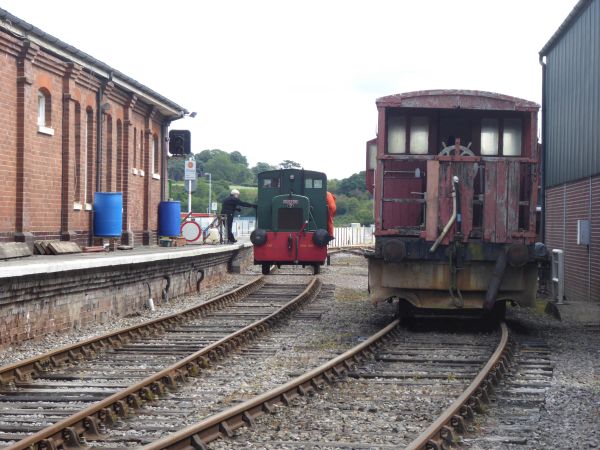
Photographic records place DB993706 firmly in departmental service through the later decades of the twentieth century. It was photographed at Wellingborough in July 1980, and again more than a decade later at Bescot in September 1992. It joined YRC along with a class 03 in the late 1990's with ownership been transfered in 2020 to YRC. By 2020, however, decades of use and open-air storage had taken their toll. Volunteers working on the van described its condition candidly at the time, noting that while the top and bottom of the body were sound, the middle section had deteriorated badly. It was one of several restoration projects underway at the centre that year, alongside a newly acquired London and South Western Railway open wagon that had been placed alongside it in the engine shed.
Restoration was complete in 2026 after a significant amount of timber was replaced.
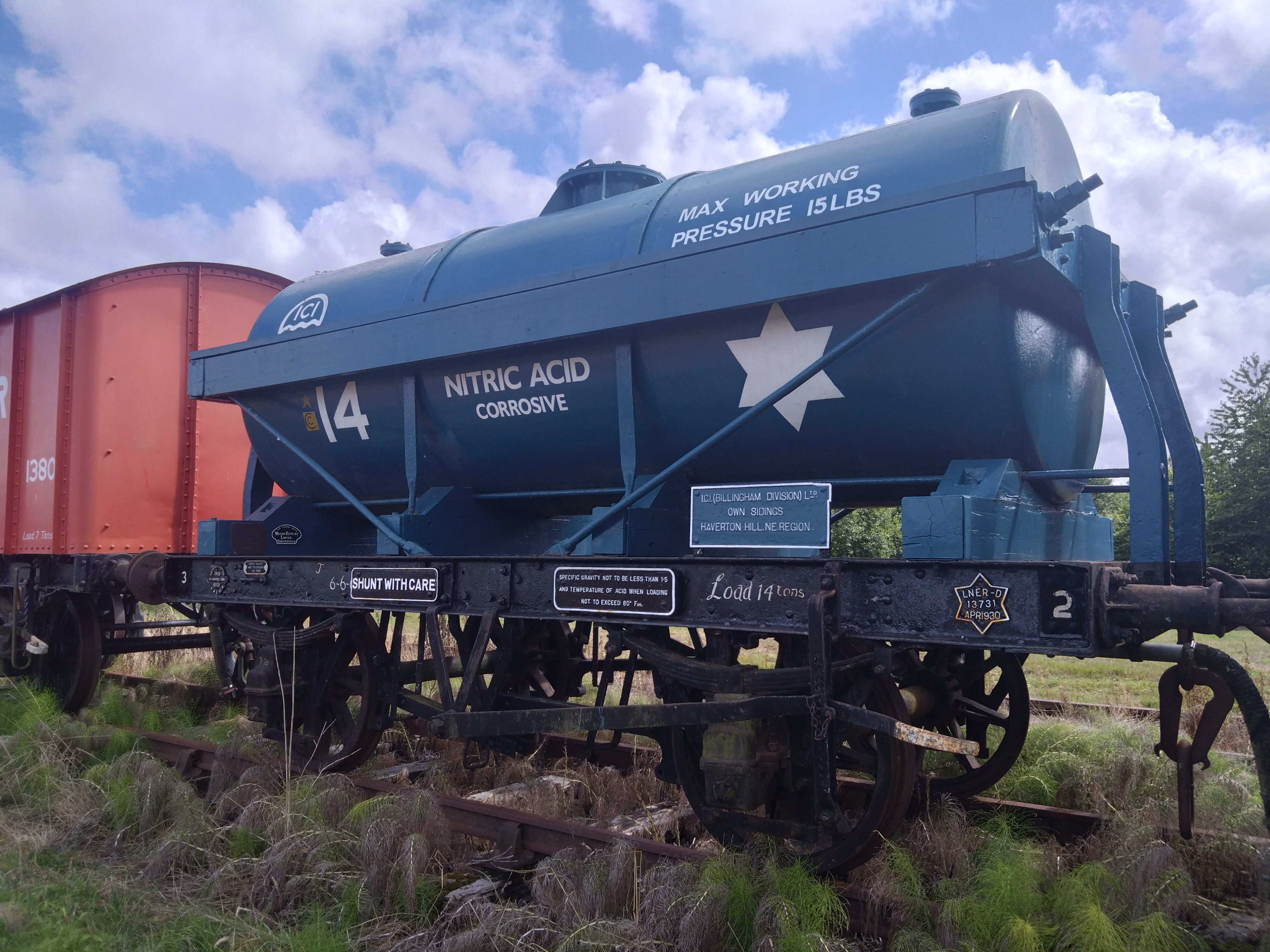
ICI Nitric Acid tanker
1935 ICI Nitric Acid tanker belonged to The National Railway Museum after consultation in 2018 they were transferred to the ownership of Yeovil Railway Centre
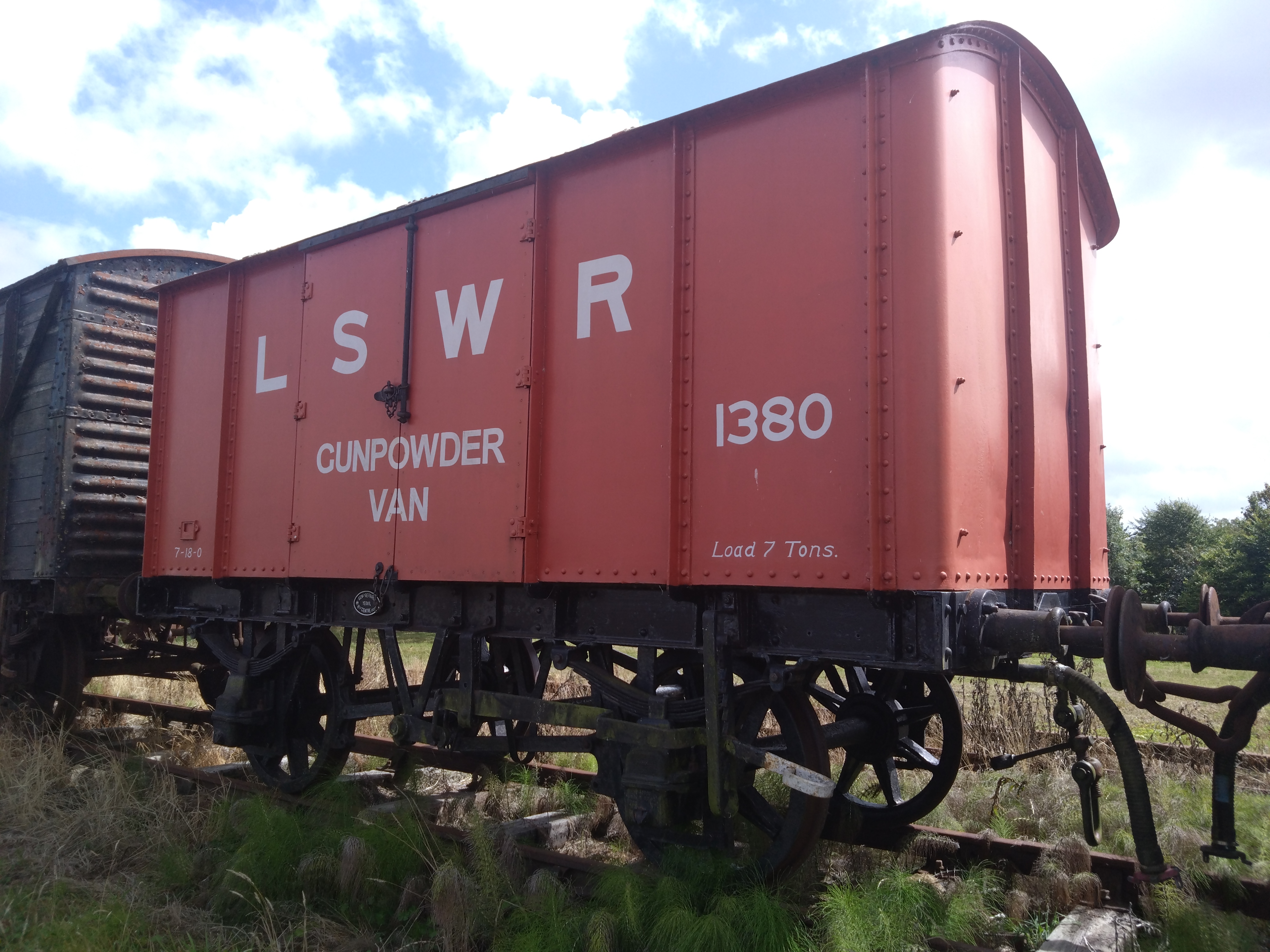
London & South Western Railway Gunpowder van
1912 - London & South Western Railway Gunpowder van (KDS 61209) belonged to The National Railway Museum after consultation in 2018 they were transferred to the ownership of Yeovil Railway Centre
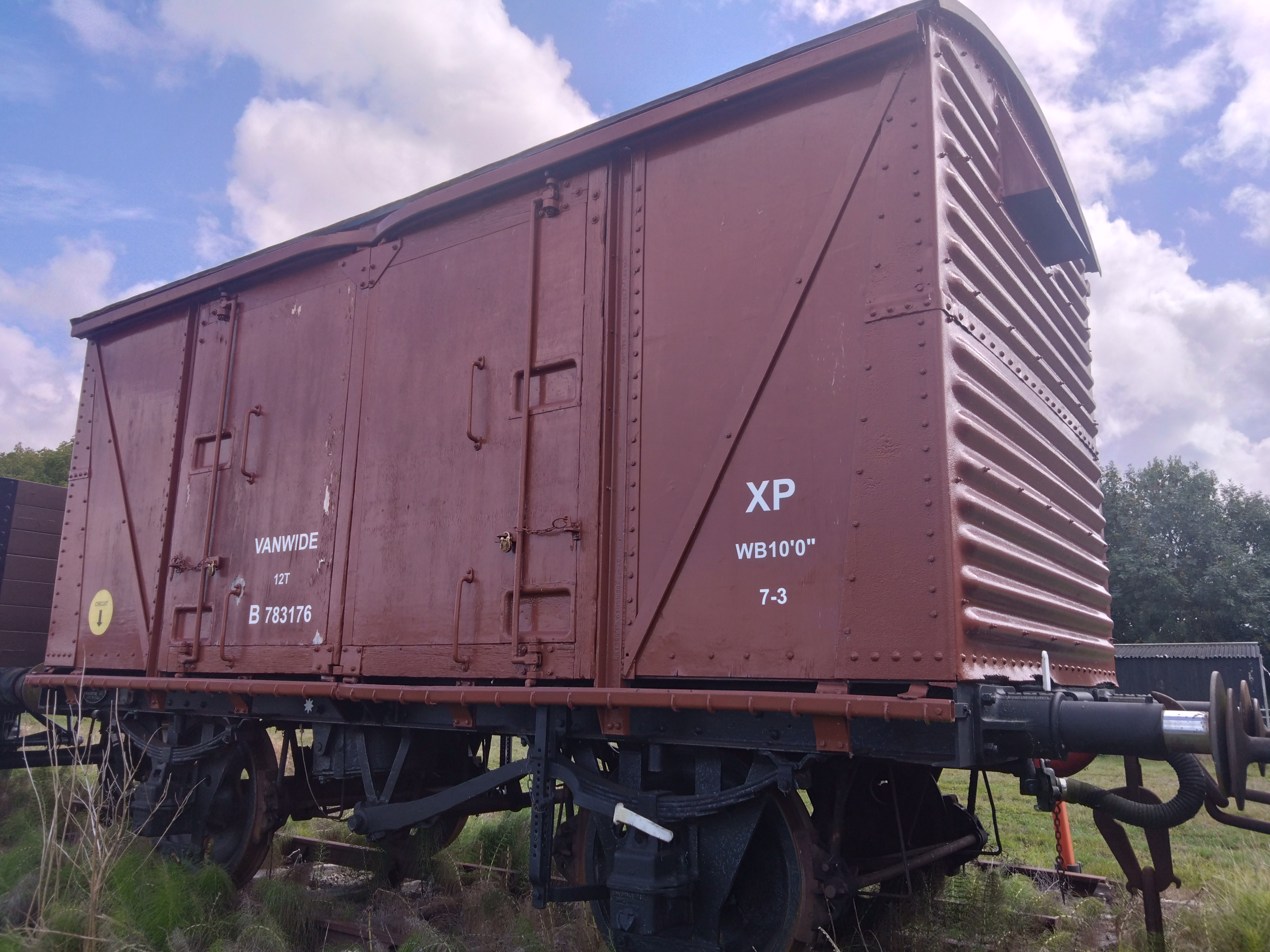
Vanwides Pallet Van
Vanwides were designed in 1962 the pair of sliding doors on each side allow a 9ft opening to carry pallets and general goods.
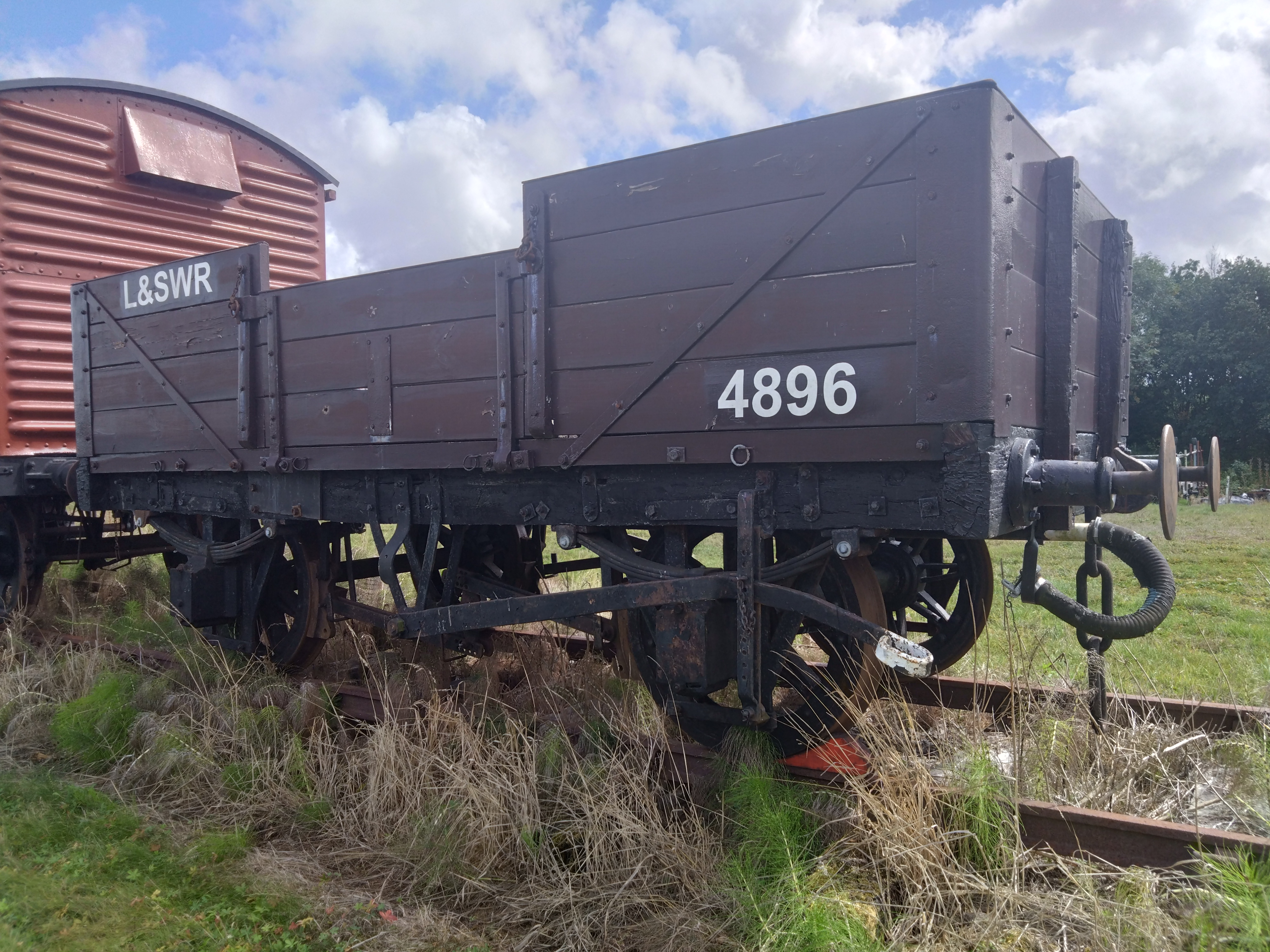
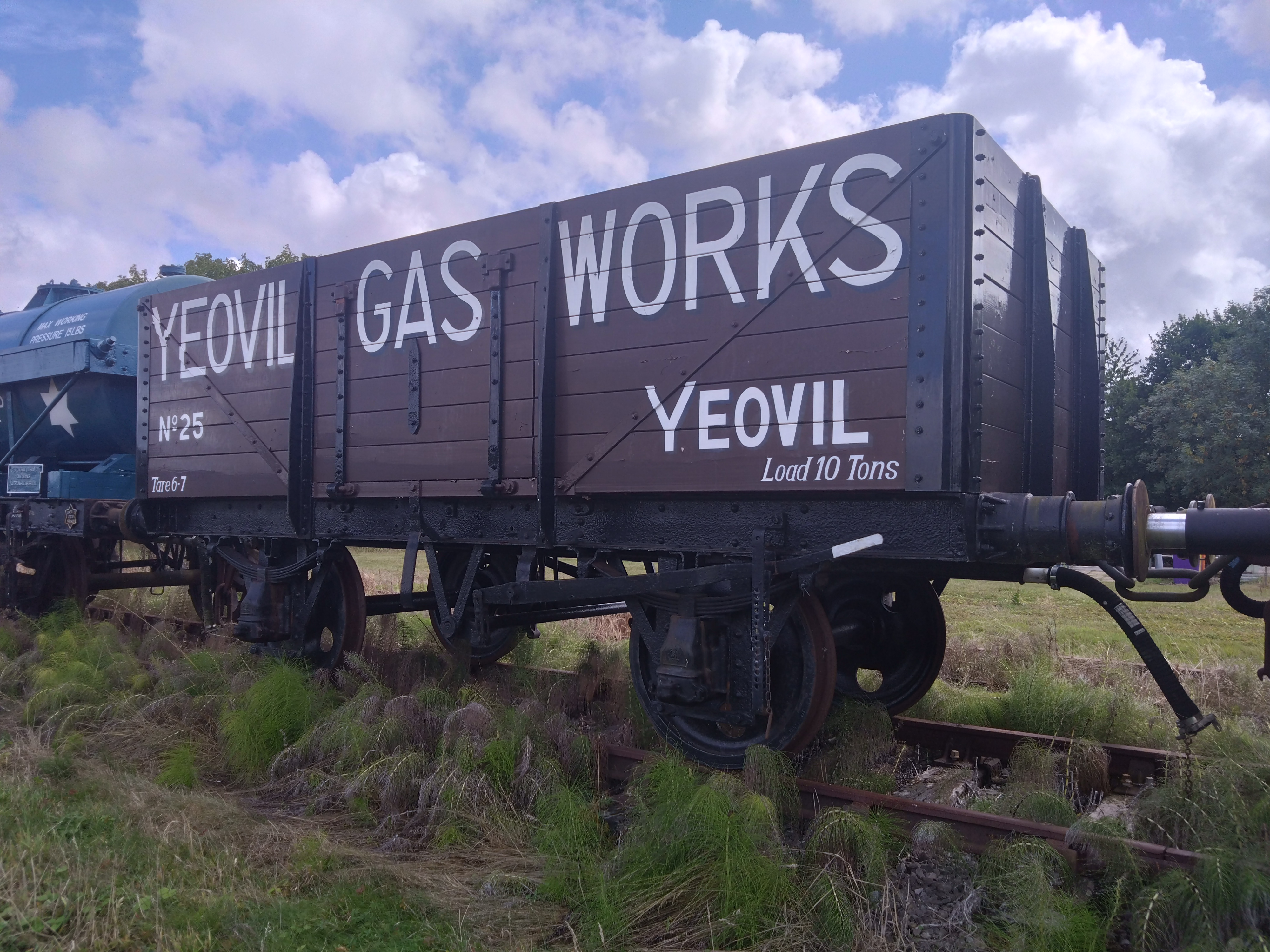
"Yeovil Gas Works" 7 plank wagon
Converted derelict 'Port of Bristol' wagon finished in 2018 was representation of a 'Yeovil Gas Works' wagon.
The wagon began life not as a Yeovil Gas Works vehicle at all, but as a derelict Port of Bristol open wagon, one of a small batch that had been sitting at the Yeovil Railway Centre for around 20 years as part of its collection of ex-industrial rolling stock. Rather than restore it in its original Bristol livery, volunteers at the centre decided to use it as the basis for a representation of a wagon that would have run for the long-vanished Yeovil Gas Works, a fitting choice given the centre's location and its wider effort to reflect local industrial history.
Work on the conversion began around 2016, with members of the Yeovil Railway Centre gradually restoring the wagon's bodywork and underframe. The restoration was finished in November 2017, at which point the wagon was immediately sheeted over and placed into storage rather than displayed straight away.
It wasn't formally unveiled to visitors until Easter 2018. It was finished in the brown livery associated with the early Yeovil Gas Works wagons, and by all accounts to a notably high standard, being described at the time as the centre's first successful attempt at fully restoring one of its Port of Bristol-derived wagons. It made its public debut a few days later, on 26 April 2018, when the Great Britain railtour visited Yeovil Junction behind a Black Five and an SR "U" class locomotive.
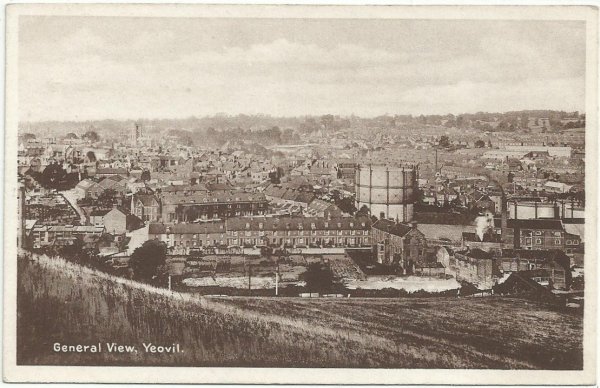
The wagon's basis as a 7-plank open has since also been echoed commercially: Dapol produced a limited-edition OO gauge model of a "Yeovil Gas Works" 7-plank wagon (not part of Wessex wagons). Picture of the gasworks from 1905 is shown below for more details of the gas works see https://www.yeovilhistory.info/gasworks.htm
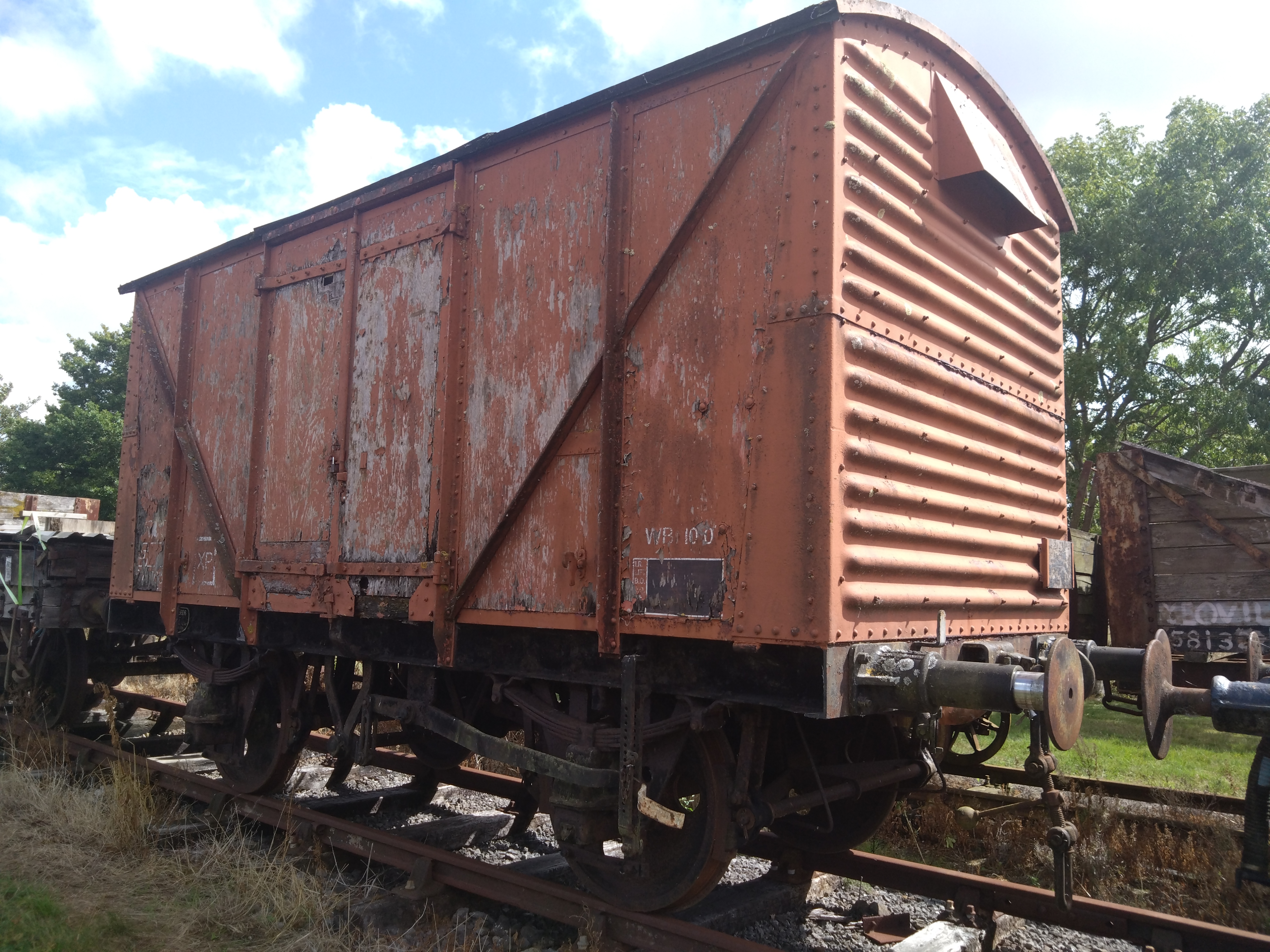
1895 London & South Western Railway Open Carriage
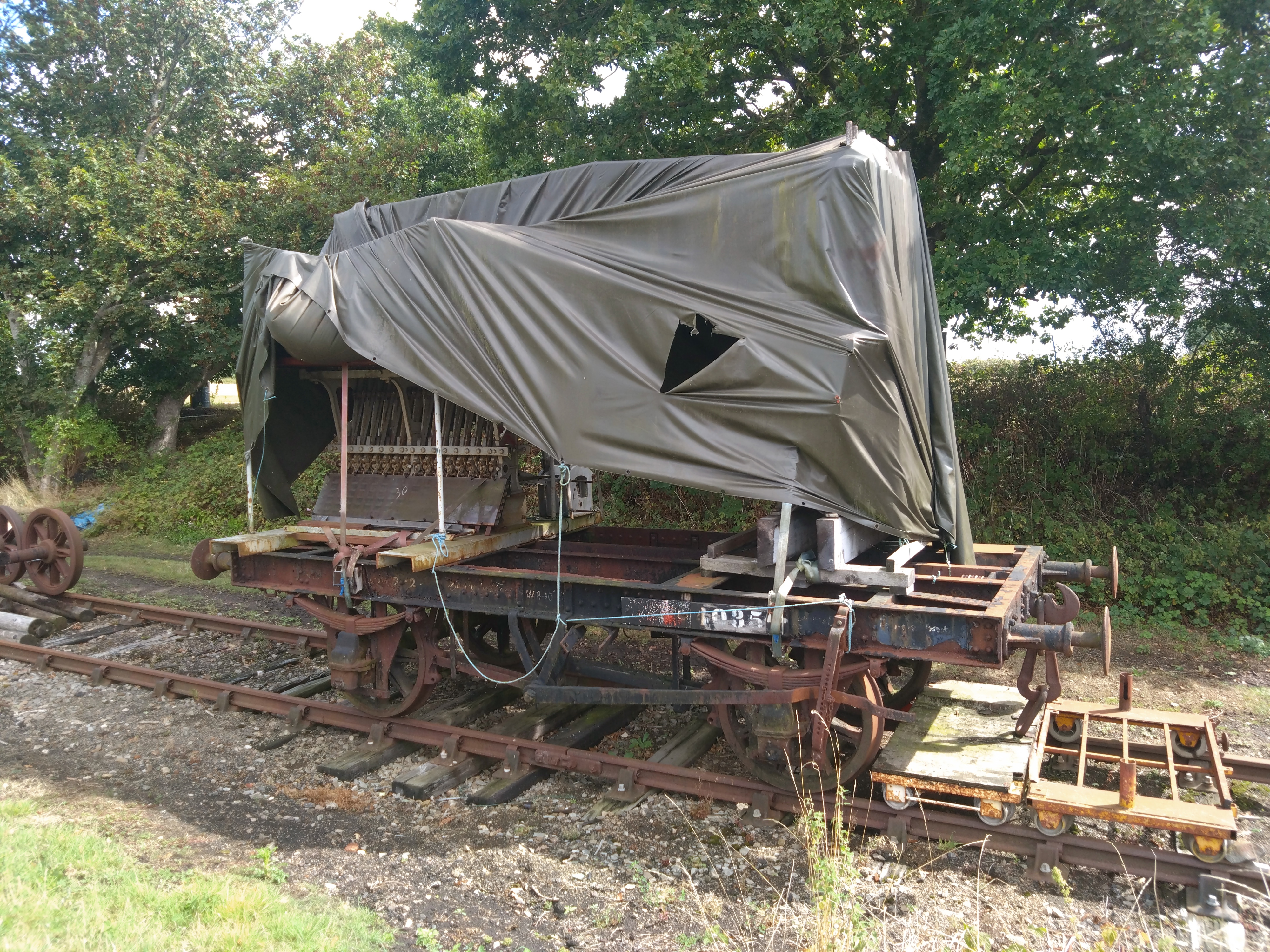
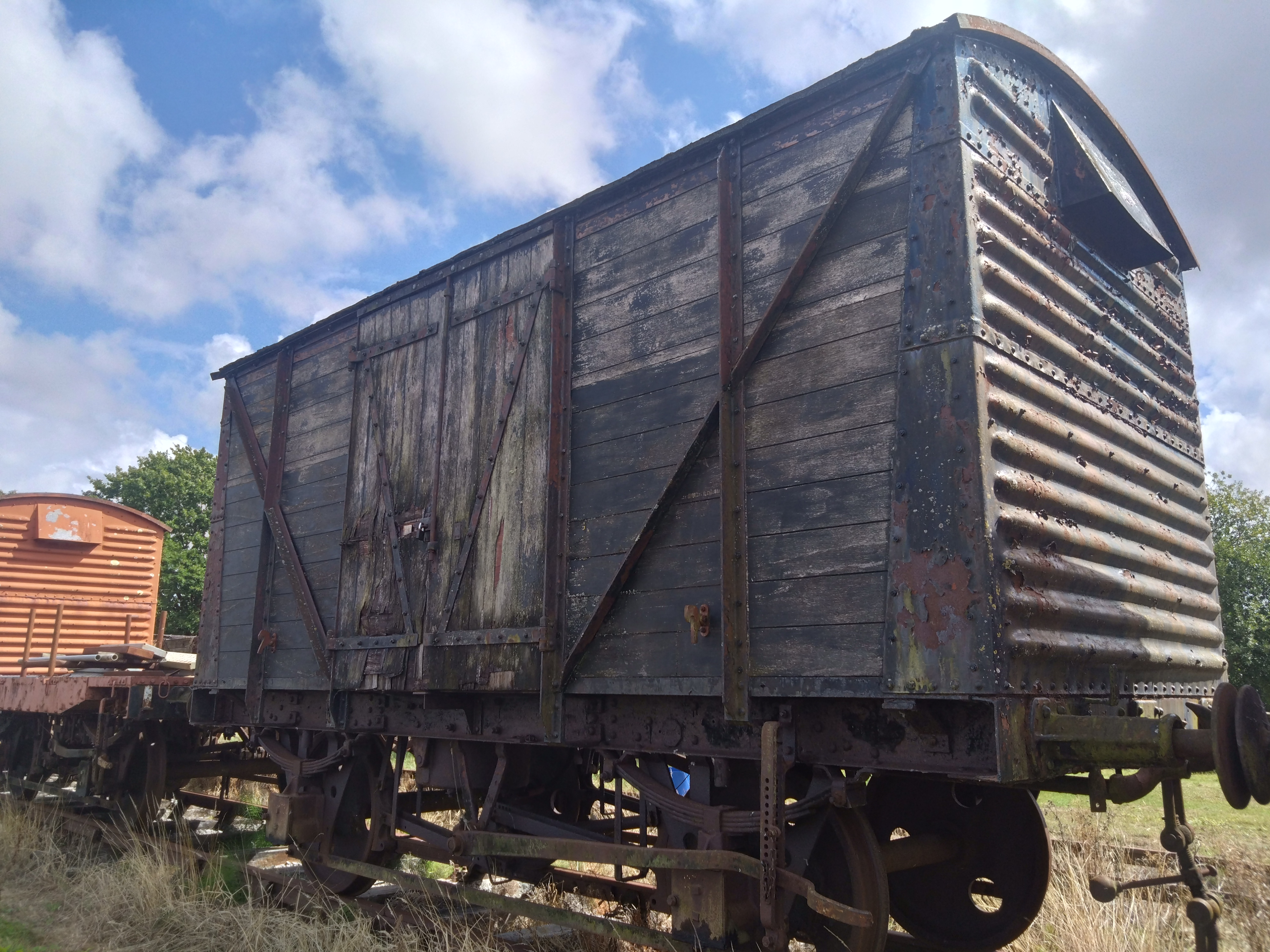
1895 London & South Western Railway Open Carriage truck (5830). Covered to protect frame, in storage.
The LSWR wagon has a timber frame and points to be horse drawn.
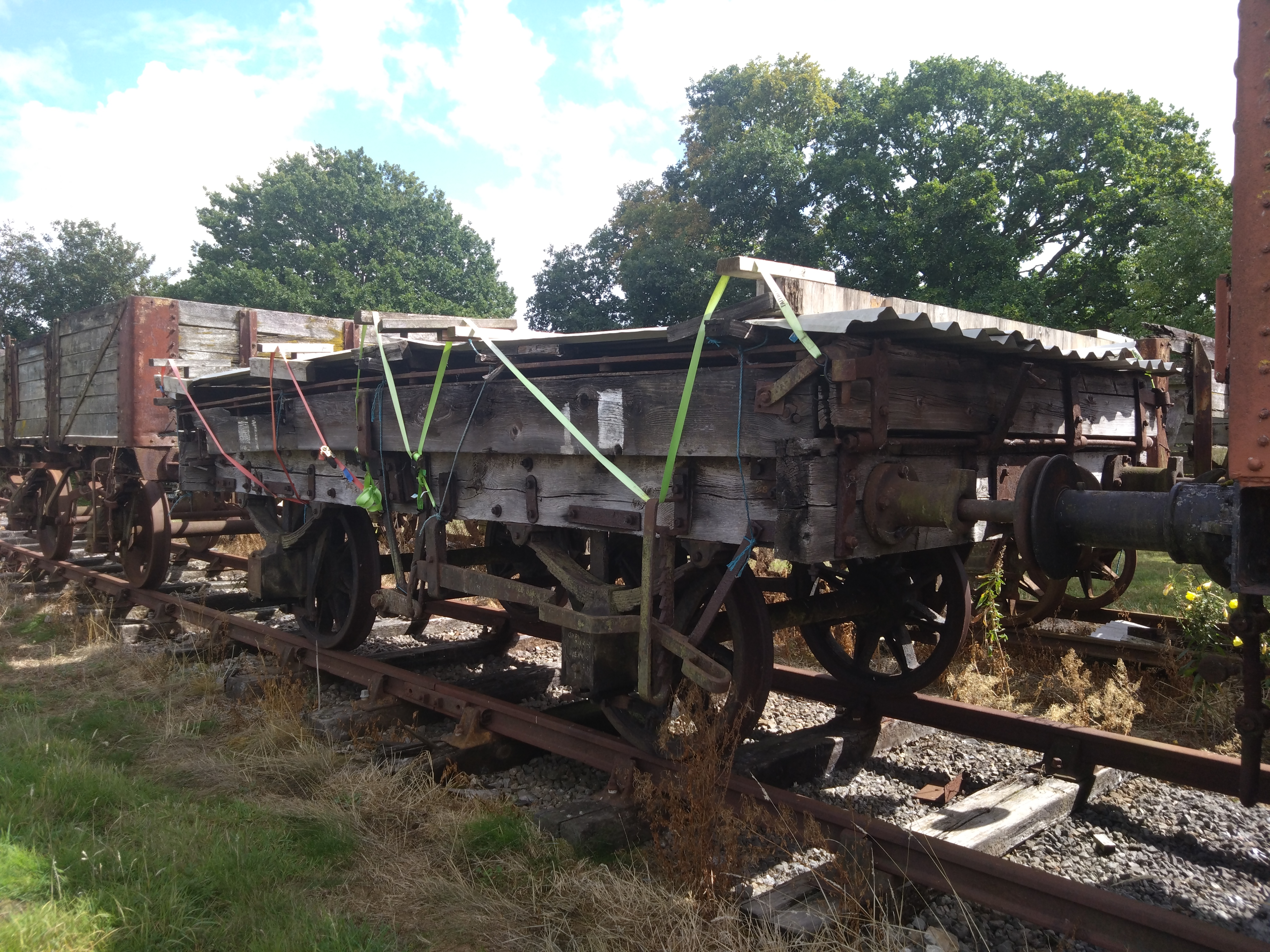
Port of Bristol wagons
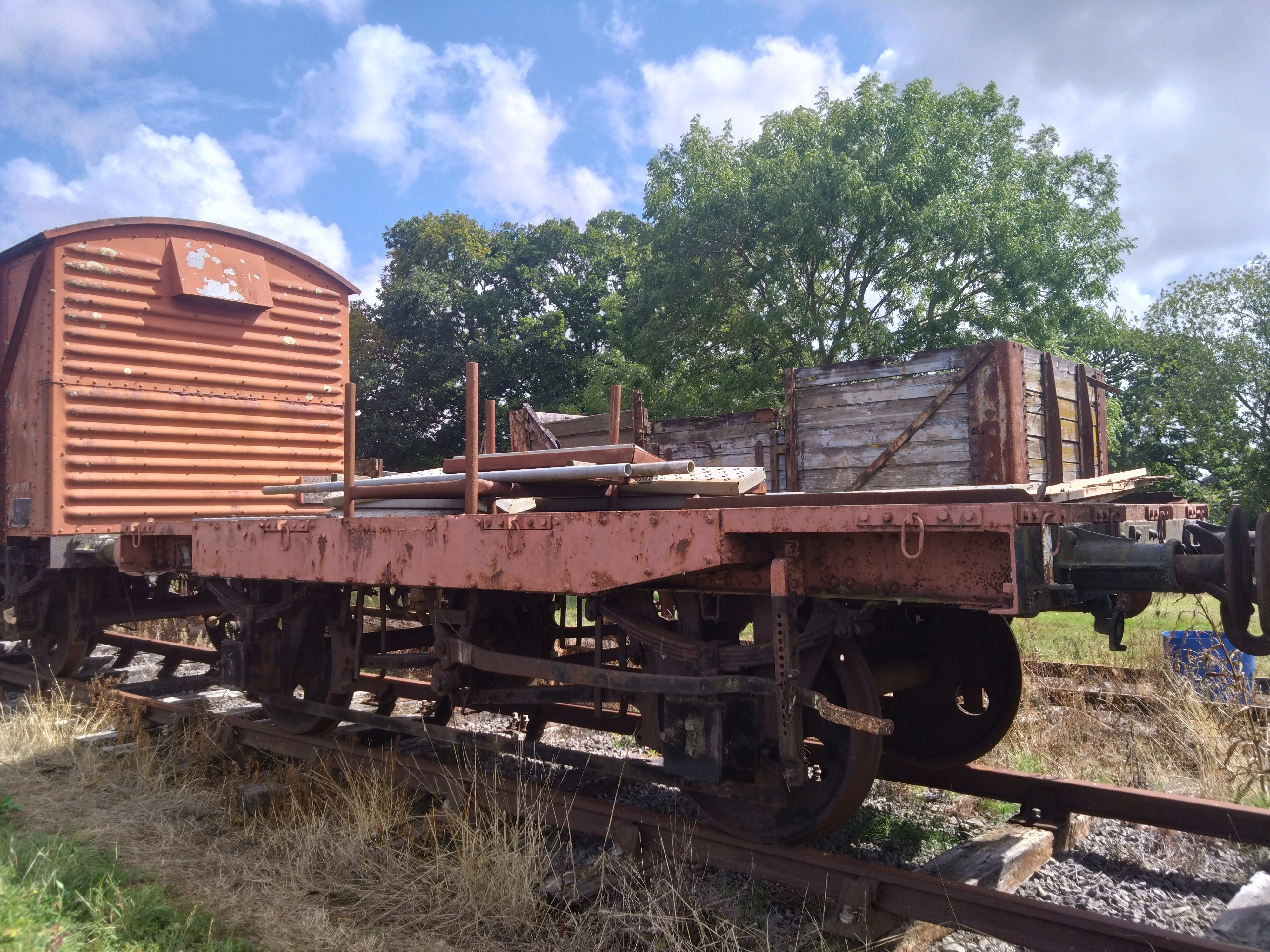
Port of Bristol wagons used as a portable loading dock, arrived at YRC in 2004. These are kept on a unconnected storage line.
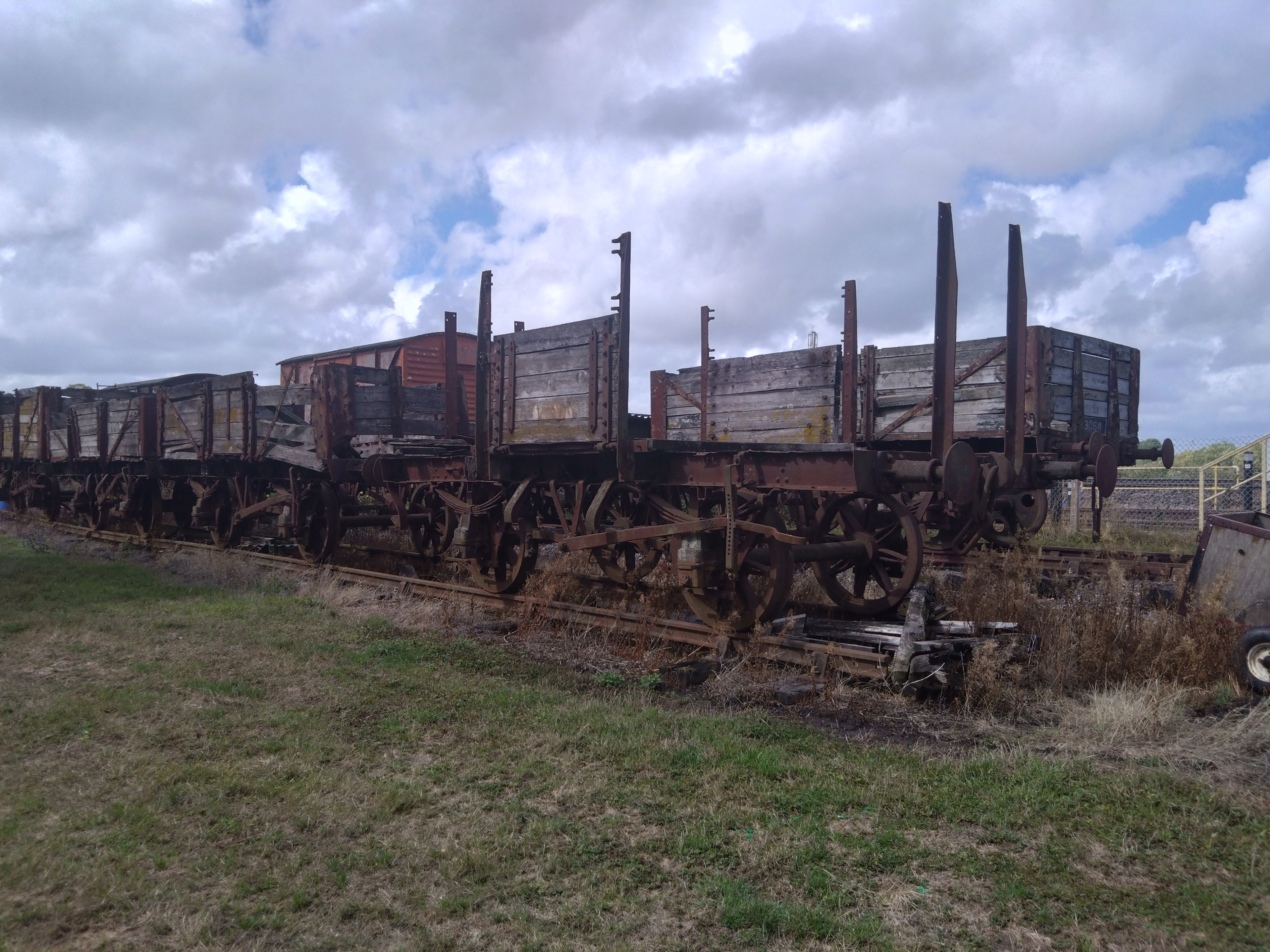
Conflat wagon
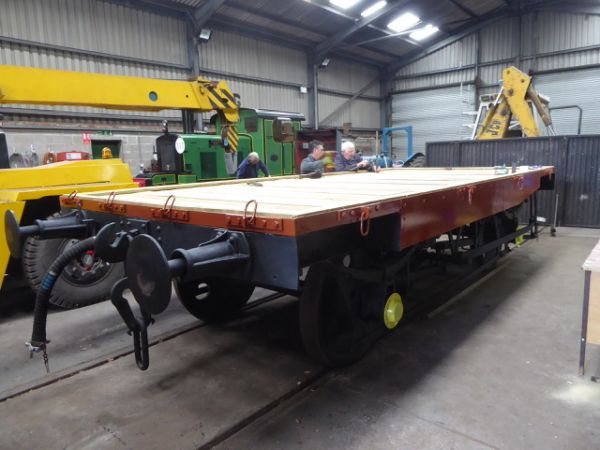
Conflat wagon restored in 2021, hopefully the base of a new exciting project to be unveiled.
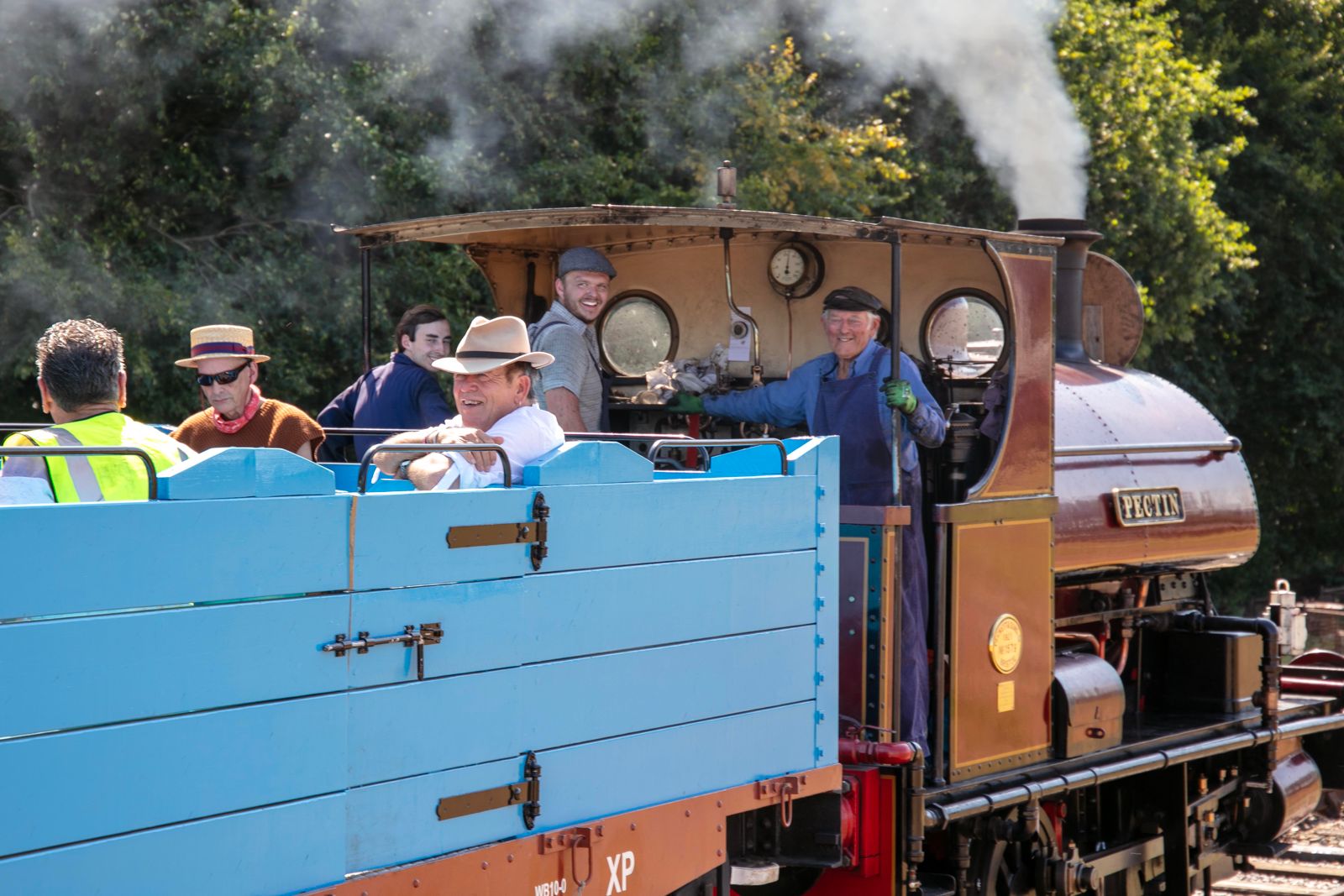
In 2025 we made the decission to start work on our open passenger wagon. Based around the principle of the 3rd class Parliamentary wagons we have made a unique experiance to see our railway.